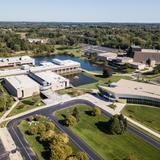
Southwestern Michigan College

  • The mission of Southwestern Michigan College is to be the college of first choice for students who have a choice, the college that provides the programs and services to meet the needs of students with limited choices, and the college that serves our community.

School Highlights

Southwestern Michigan College serves 2,000 students (49% of students are full-time).
The college's student-teacher ratio of 26:1 is lower than the state community college average of 33:1.
Minority enrollment is 30% of the student body (majority Black), which is less than the state average of 40%.

Quick Facts (26-27)

  • Enrollment: 2,000 students
  • In-state tuition: $5,866
  • Out-state tuition: $6,263
  • Student-teacher ratio: 26:1
  • Minority enrollment: 30%
  • Source: Integrated Postsecondary Education Data System (IPEDS)

School Overview

The teacher population of 77 teachers has declined by 59% over five years.
Southwestern Michigan College
(MI) Community College Avg.
Carnegie Classification
Associate's Colleges
Associate's Colleges: High Career & Technical-High Traditional
Institution Level
At least 2 but less than 4 years
Institution Control
Public
Public
Year Founded
1964
Campus Size
240 acres
Total Faculty
77 staff
70 staff
School Calendar
AccreditationAccred.
Higher Learning Commission (HLC)

Student Body

The student population of Southwestern Michigan College has grown by 13% over five years.
The student-teacher ratio of 26:1 has increased from 11:1 over five years.
The Southwestern Michigan College diversity score of 0.48 is less than the state average of 0.60. The school's diversity has grown by 35% over five years.
Total Enrollment
2,000 students
2,473 students

Showing 2012–2025. Full 19-year historical data available below ↓

Student-Teacher Ratio
26:1
33:1
# Full-Time Students
981 students
889 students

Showing 2012–2025. Full 19-year historical data available below ↓

# Part-Time Students
1,019 students
1,584 students

Showing 2012–2025. Full 19-year historical data available below ↓

# Enrollment Undergraduate
2,000 students
2,151 students
# Full-Time Undergraduate Students
981 students
961 students

Showing 2012–2025. Full 19-year historical data available below ↓

# Part-Time Undergraduate Students
1,019 students
1,658 students
% American Indian/Alaskan
1%
1%
% Asian
1%
3%

Showing 2008–2025. Full 19-year historical data available below ↓

% Hispanic
1%
7%

Showing 2008–2025. Full 19-year historical data available below ↓

% Black
13%
16%

Showing 2008–2025. Full 19-year historical data available below ↓

% White
70%
60%

Showing 2010–2025. Full 19-year historical data available below ↓

% Two or more races
7%
4%
% Unknown races
6%
8%
Diversity Score
0.48
0.60

Showing 2011–2025. Full 19-year historical data available below ↓

College Completion Rate (Students who graduate in less than 4 years)
32%
31%

Showing 2015–2025. Full 19-year historical data available below ↓

Average Graduate Earnings (10 Years)
$28,700
$30,600

Tuition & Financial Aid

The public in-state tuition of $5,866 is more than the state average of $4,930. The in-state tuition has declined by 13% over four years.
The public out-state tuition of $6,263 is less than the state average of $6,838. The out-state tuition has declined by 13% over four years.
In-State Tuition Fees
$5,866
$4,930

Showing 2008–2025. Full 19-year historical data available below ↓

Out-State Tuition Fees
$6,263
$6,838
% Students Receiving Some Financial Aid
94%
89%

Showing 2013–2025. Full 19-year historical data available below ↓

Median Debt for Graduates
$11,075
$11,915
Median Debt for Dropouts
$5,500
$5,500
Source: 2025 (or latest year available) Integrated Postsecondary Education Data System (IPEDS) , School Administrators

School Notes

  • We offer small class sizes, ensuring you will receive significant personalized attention from your instructors. We have campuses conveniently located in Dowagiac and Niles - close to home and work. We also have academic support services that offer assistance every step of the way from the time you apply for admission to SMC to the completion of your degree and beyond. We have high quality transfer courses and curricula for students who wish to pursue their first two years of a four-year degree at SMC before transferring to a four-year college or university. Plus, SMC is committed to offering the highest quality academic experience at less than half the cost of most four-year colleges and universities. Southwestern Michigan College offers two-year transfer programs (Associate in Arts and Associate in Sciences degrees) and professional technical programs. In addition, students can now complete a bachelor's degree in one of six areas right on our campuses. Southwestern Michigan College offers many scholarships, including generous awards for academically talented students in the most recent high school class. Southwestern Michigan College is accredited by the Higher Learning Commission, a commission of the North Central Association of Colleges and Schools.
  • Sample of notable school alumni/alumnae:
    • Nick Weston, Biochemistry - Graduated 2024, pursued studies at Ferris State University. -

Frequently Asked Questions

How much does Southwestern Michigan College cost?
Southwestern Michigan College's tuition is approximately $5,866 for In-State students and $6,263 for Out-State students.
Who are famous alumni from Southwestern Michigan College?
Southwestern Michigan College famous alumni include: Nick Weston, Biochemistry - Graduated 2024, pursued studies at Ferris State University..

Recent Articles

Licensure Pass Rates: What Students Should Check
Learn how to evaluate licensure pass rates before enrolling in community college career programs, compare exam results, identify warning signs, and choose training that supports professional licensing and employment goals.
Do Your Transfer Credits Count Toward Your Major?
A college course may transfer without counting toward your major. Learn how to check degree requirements, identify elective credits, avoid graduation delays, and protect your community college transfer plan.
Transfer With 45 Credits, 60 Credits, or a Degree?
Should you transfer with 45 credits, 60 credits, or an associate degree? Compare university requirements, tuition savings, graduation timelines, and transfer benefits to choose the best path for your goals.

Quick Facts (26-27)

  • Enrollment: 2,000 students
  • In-state tuition: $5,866
  • Out-state tuition: $6,263
  • Student-teacher ratio: 26:1
  • Minority enrollment: 30%
  • Source: Integrated Postsecondary Education Data System (IPEDS)

Related School Videos

Did You Know?

For Michigan public community colleges, the average tuition is approximately $4,930 per year for in-state students and $6,838 for out-of-state students. For private community colleges, the average yearly tuition is approximately $9,806 per year. Read more about average community college tuition costs across the country.

The average community college acceptance rate in Michigan is 85%. Read more about national community college acceptance rates.

Michigan community colleges have a diversity score of 0.60, which is lower than the national average of 0.74. The most diverse community college in Michigan is Taylor Andrews Academy of Hair Design-Hair Lab Detroit Barber School. Read more about community college diversity statistics in the USA.

Quick Links