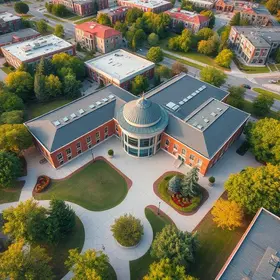
School Highlights
Harrison College-Indianapolis served 3,498 students (71% of students were full-time).
The college's student-teacher ratio of 20:1 was lower than the state community college average of 44:1.
Minority enrollment was 31% of the student body (majority Black), which was less than the state average of 55%.
School Overview
Harrison College-Indianapolis
(IN) Community College Avg.
Carnegie Classification
Associates Colleges
Associate's--Public Suburban-serving Single Campus
Institution Level
Less than 2 yrs
Four or more years
Institution Control
Private, for profit
Public
Year Founded
1902, Marion, IN
Total Faculty
174 staff
99 staff
Student Body
Total Enrollment
3,498 students
3,927 students
Student-Teacher Ratio
20:1
44:1
# Full-Time Students
2,469 students
1,144 students
# Part-Time Students
1,029 students
2,783 students
# Enrollment Undergraduate
2,469 students
1,921 students
# Full-Time Undergraduate Students
2,469 students
2,566 students
% Hispanic
2%
4%
% Black
10%
10%
% White
69%
45%
% Two or more races
2%
3%
% Unknown races
17%
35%
Diversity Score
0.48
0.66
Average Graduate Earnings (10 Years)
$25,800
$31,500
Tuition & Financial Aid
Private State Tuition Fees
$17,025
$16,698
% Students Receiving Some Financial Aid
91%
88%
Median Debt for Graduates
$28,167
$14,750
Median Debt for Dropouts
$7,080
$5,500
Acceptance Rate
100%
75%
Source: 2020 (or latest year available) Integrated Postsecondary Education Data System (IPEDS)
School Notes
- Harrison College campuses are accredited by the Accrediting Council for Independent Colleges and Schools to award Certificates, Diplomas, Associate of Applied Science, Associate of Science, and Bachelor of Science degrees. The award level varies by campus.
Frequently Asked Questions
How much does Harrison College-Indianapolis cost?
Harrison College-Indianapolis's private state tuition is approximately $17,025.
What is the acceptance rate of Harrison College-Indianapolis?
The acceptance rate of Harrison College-Indianapolis is 100%, which is higher than the state average of 75%.
Recent Articles

Licensure Pass Rates: What Students Should Check
Learn how to evaluate licensure pass rates before enrolling in community college career programs, compare exam results, identify warning signs, and choose training that supports professional licensing and employment goals.

Do Your Transfer Credits Count Toward Your Major?
A college course may transfer without counting toward your major. Learn how to check degree requirements, identify elective credits, avoid graduation delays, and protect your community college transfer plan.

Transfer With 45 Credits, 60 Credits, or a Degree?
Should you transfer with 45 credits, 60 credits, or an associate degree? Compare university requirements, tuition savings, graduation timelines, and transfer benefits to choose the best path for your goals.