
Why Community College

Learn all about community college and whether it is the right choice for your academic career. We'll cover the history of community colleges, the latest trends and issues, and the top degree-producing schools. Find out why students are turning to community colleges, see what issues affect campuses with such a diverse student body, and get information on the latest trends in degree offerings.

View the most popular articles in Why Community College:

Why Do Community Colleges Get a Bad Rap?

Updated
|
Why Do Community Colleges Get a Bad Rap?
Do community colleges deserve their reputation? Discover the benefits, common misconceptions, transfer opportunities, and career advantages of community colleges in 2026.

Choosing a college is a huge decision, one that will affect your career options for the rest of your life. Not only is selecting a college a life-changing decision, but it can be a very challenging decision to make simply because there are so many options. Between state colleges, private colleges, and community colleges, your options are nearly limitless but, for many people, community colleges aren’t even on the radar. Why is it that community colleges get such a bad rap, and is a bad reputation deserved?

The Benefits of Community College

Before getting into the reason behind the bad rap community college often receives, it would benefit you to learn some of the reasons why someone might choose a community college over a state or private institution. You will find a list of benefits associated with community colleges below:

  • Lower Tuition Costs – The main benefit of attending community college over a state or private institution is reduced tuition costs. While a private college might charge tens of thousands of dollars per year, community colleges remain one of the most affordable pathways to higher education. Students comparing costs may want to review the 2026 community college tuition outlook.
  • Off-Campus Housing – One of the major costs associated with state and private colleges is the cost of housing. If you choose to attend community college, you don’t have to pay for on-campus housing and you may even be able to live at home.
  • Focused Faculty – At a
. . .read more

Online Options At Community Colleges

Updated
|
Online Options At Community Colleges
Community colleges have responded to the needs of working adults with online options.

Working adults have long struggled with the challenges of balancing their careers, their families, and their educational goals. Community colleges offer traditional and non-traditional students the opportunity to work toward their educational goals without the lifestyle changes that come with the traditional four-year college experience. But, even with the flexibility of early morning, evening, and even Saturday classes, adult students can find it difficult to attend even local college campuses.

Convenient, Expensive, Private On-line Universities

Private online universities, sometimes called for-profit universities, actively market the convenience of attending college courses online, anytime, from anywhere. While online universities offer a convenient option for working students, they are typically far more expensive than public community colleges. For example, the total cost of a two-year degree at the online University of Phoenix is approximately $22,000, while the same two-year degree from a community college in New York would cost an in-state resident about $9,000. Community Colleges Respond to a Need for Convenience

Richard Lock explains the 7 top benefits of online learning in this video.

Community college administrators understand that students often choose much more expensive college options because of convenience. As a result, they are taking steps to make community college more accessible to all students by introducing new modalities for online learning, including:

Sometimes called hybrid classes, blended classes combine traditional on-campus classroom instruction with

. . .read more

Is a Community College Bachelor’s Degree a Smart Choice?

Updated
|
Is a Community College Bachelor’s Degree a Smart Choice?
In recent years, community colleges have been granted permission to offer four-year degrees. For some, this represents a great opportunity to get an education at an affordable price. But for others, worry with regard to the quality of these newly established programs is a point of concern.

The lure of an affordable college education brings countless thousands of students just like you to community college campuses each semester. With a greater breadth and depth of course offerings and degree programs available than ever before, community colleges represent excellent value for many students who seek to build their skills for future educational and career endeavors. In addition to many associate's degrees and professional certificate programs, community colleges throughout the country offer select bachelor's degree programs, furthering the appeal of the community college route. However, despite the many advantages of these programs, they are not for everyone.

Degree Programs Around the Nation

The movement to allow community colleges to offer four-year degrees is borne out of the needs of the modern workforce. Education and economic officials recognize that with major gaps in the workforce in healthcare, energy exploration, and information technology, new workers need to be trained. Community colleges represent an excellent opportunity to train these workers because they are typically at the forefront of educational innovation and are much more able to respond to the changing needs of the workforce than a four-year institution.

This new wave of educational opportunity is present in all corners of the country. More than a dozen community colleges in Washington State now offer baccalaureate degrees. More than two dozen two-year institutions in Florida offer four-year degree options. Texas, Hawaii, and West Virginia community colleges have gotten on board with providing bachebachelor'see programs as well. Community colleges in 21

. . .read more
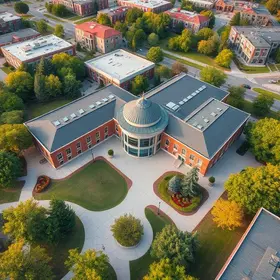
Second Rate? Community Colleges Fight Stereotypes

Updated
|
Second Rate? Community Colleges Fight Stereotypes
Many common myths about community colleges exist, but as they continue to diversify and offer cutting-edge programming, two-year institutions are fighting back against these long-held stereotypes.

Some see it as the “easy way out.” Minimal entrance requirements, open enrollment, and a wide variety of basic and remedial courses give some people the impression that the community college experience is not academically rigorous. Although there might have been some truth to this stigma a few decades ago, community colleges of today are on the leading edge of education, particularly for new and emerging career areas experiencing explosive growth. Yet, many myths about community colleges still exist.

Myth #1: Students Rejected from Four-Year Colleges

Perhaps the most pervasive stereotype about community college students is that they are there out of academic necessity, not out of choice. Some people assume that four-year institutions' more stringent entrance criteria are too much for ‘those students’ to meet, forcing them to study instead at a local junior college. While academic necessity is a reason for some students to attend a two-year institution, the overarching reason why students choose to attend a community college is cost-effectiveness.

The per-year cost of a university education is roughly three times that of the per-year cost of attending a two-year school. With many 21st-century careers needing only an associate’s degree and increasingly smooth transfer procedures from community colleges to universities, completing the first two years of one’s education at a two-year institution makes a lot of financial sense. The flexible nature of community college scheduling and the availability of scholarships and grants means that many students can obtain their associate’s degree or equivalent

. . .read more

Community Colleges: Bigger Buck Bang than For-Profits

Updated
|
Community Colleges: Bigger Buck Bang than For-Profits
A recent study reveals that job applicants with a credential or associate’s degree from a community college have slightly better chances of getting a job interview than students who attend a for-profit college or university. Since community colleges are much more budget friendly than for-profit institutions and have much better job placement results, community colleges are a much better option for employment-minded students.

A recent report by the National Center for the Analysis of Longitudinal Data in Education Research found that employers show little preference between a job candidate with an education from a for-profit institution such as DeVry or the University of Phoenix and one with an education from a public community college. In a study in which researchers tracked the callbacks to 9,000 fictitious job applications, 11.6 percent of employers responded to applications listing a community college education. In contrast, 11.3 percent responded to faux applications of students from for-profit colleges. Companies also requested interviews of community college students more often – 5.3 percent – compared to 4.7 percent for applications listing a for-profit college education.

ABC News investigates for-profit schools accused of misleading prospective students about job prospects post-graduation.

The fabricated applications were submitted with similar credentials, either an associate’s degree, certificate, or some college education, so applicants would not be called because of an imbalance of qualifications. What the study’s findings suggest is similar to what other studies on for-profit education have discovered: When it comes to applying for a job, community college students are as much, if not more attractive to employers as students from for-profit schools.

It is important to note that this research does not delve deeper into hiring a new employee and only examines employers’ initial responses. Differences between community college-educated and for-profit college applicants are not accounted

. . .read more

Recent Articles

Credit for Prior Learning: When Life Experience Can Shorten Your Degree
Learn how Credit for Prior Learning (CPL) can help community college students earn college credit for military service, work experience, certifications, and prior learning, reducing both the time and cost of earning a degree.
The Working Student Schedule Test: Can You Balance College and a Job?
Discover how to evaluate whether your work schedule is compatible with community college before classes begin, and learn practical strategies that help working students stay on track toward graduation.
Stop-Out Risk: How to Choose a Community College That Helps You Finish
Learn how to identify community colleges that actively reduce stop-out risk through proactive advising, financial support, transfer pathways, flexible scheduling, and student success services, helping you stay enrolled, complete your credential, and achieve your long-term educational goals.

Why Community College

OVERVIEW
What is a community college and why are more students turning to them? Who are some of the most famous community college graduates? Here you’ll find the answers to these questions and more.
TRENDS AND CURRENT ISSUES
Get information on the latest trends and issues affecting community colleges today. Explore the impact of community colleges on the global economy, get information on how community colleges have changed over the years, and see how the latest technologies are being employed on campus.
STUDENT POPULATIONS
Attracting students from all walks of like, community college campuses are rich with diversity. This section covers a myriad of issues relating to student populations. Learn more about LGBT support on community college campuses, explore adult-friendly degree programmers and, see what resources are available to veterans.
ENROLLMENT & ADMISSIONS
We provide a comprehensive look into some of the most important issues affecting enrollment and admissions. Get the latest news on declining enrollment across the country and the impact it has. Learn more about the latest trends in admissions requirements from vaccinations to placement tests. Find expert advice on what to expect your first year, and lean more about the pitfalls to avoid.